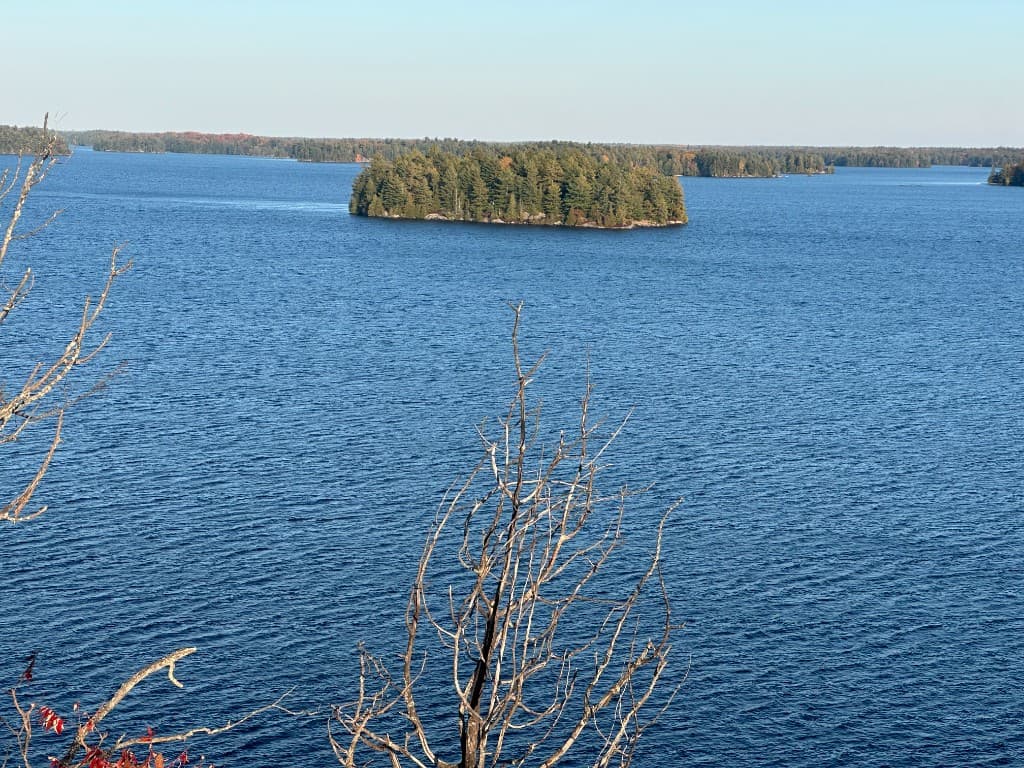
25 Paddle-In Island Campsites
Paddle to your own island, set up camp, fish at sunset, and fall asleep under a sky full of stars. $25/night, May through October.
What is Backcountry Camping?
This isn't car camping. There are no roads, no RV hookups, no picnic pavilions. Big Gull Lake's 25 backcountry campsites are scattered across pristine Canadian Shield islands — accessible only by canoe or kayak. You paddle out, find your island, and set up camp in total wilderness solitude.
Each site is managed by North Frontenac Parklands and sits on Crown land islands surrounded by 6,000 acres of clean, spring-fed water. Most sites have a fire ring, a cleared tent pad, and a thunderbox (privy). That's it — everything else, you bring.
Use Island View Retreat as Base Camp
The best way to experience backcountry camping on Big Gull Lake is to use Island View Retreat as your base camp. Paddle out for a night or two of island camping, then return to the cottage for hot showers, a real bed, and a home-cooked meal.
- 2 canoes and 2 kayaks included with your stay
- Hot showers and laundry when you return
- Full kitchen to refuel after roughing it
- Sandy beach for the kids while you recover
- Camp's Bay Marina next door for any last-minute gear
Explore All 25 Campsites
Browse every campsite with GPS coordinates, terrain ratings, amenities, and photos. Find the perfect island for your trip.
Best Campsites by Category
Not sure which site to book? Here are our recommendations based on what you're looking for.
Best for Families
Sandy landings, easy terrain, flat tent pads, and gentle water access for kids.
- Site 2 — Flat Pine Point
- Site 7 — Sandy Beach Island
- Site 14 — Turtle Cove
Most Secluded
The farthest sites from any road or cottage — total wilderness solitude.
- Site 19 — North Narrows
- Site 22 — Eagle Rock
- Site 25 — Hidden Bay
Best Fishing
Near productive shoals, drop-offs, or weed beds — cast right from camp.
- Site 5 — Walleye Point
- Site 11 — Bass Island
- Site 16 — Deep Basin Camp
Best Sunset Views
West-facing campsites with unobstructed views of the sunset over the water.
- Site 3 — Sunset Bluff
- Site 9 — West Shore Lookout
- Site 18 — Golden Hour Island
Closest to Island View Retreat
A short 15–30 minute paddle from IVR — perfect for a first backcountry night.
- Site 1 — Camp's Bay Island
- Site 2 — Flat Pine Point
- Site 4 — South Channel
Gear Checklist
Backcountry camping means everything you need comes with you in the canoe. Here's what to pack.
Shelter & Sleep
- Tent (freestanding — island rock won't take stakes easily)
- Sleeping bag (rated to 5°C for shoulder seasons)
- Sleeping pad or air mattress
- Tarp for rain shelter over cooking area
Water & Food
- Water filter or purification tablets
- Camp stove + fuel canister
- Lightweight cookware (pot, pan, utensils)
- Cooler with ice for perishables
- Food in sealed containers (bear precaution)
- 50 ft rope for bear hang
Safety & Navigation
- PFDs (one per person — legally required)
- First aid kit
- Headlamp + extra batteries
- Waterproof map of Big Gull Lake
- Whistle
- Sunscreen + bug spray
- Cell phone in waterproof bag (limited signal)
Paddling & Transport
- Dry bags for gear (waterproof everything)
- Bow & stern lines for canoe
- Spare paddle
- Bilge sponge or pump
- Canoe/kayak cart if portaging
How to Book a Campsite
All 25 campsites on Big Gull Lake are managed by North Frontenac Parklands. Permits are required for overnight stays.
Leave No Trace
These islands have remained pristine for thousands of years. Follow the seven Leave No Trace principles to keep them that way for the next generation of paddlers.
1. Plan Ahead & Prepare
Know your route, check the weather, and bring everything you need. There are no supply stops on the islands.
2. Travel & Camp on Durable Surfaces
Use established tent pads and trails. Avoid trampling vegetation on fragile island shorelines.
3. Dispose of Waste Properly
Pack out everything you pack in — all garbage, food scraps, and hygiene products. Use the thunderbox where provided.
4. Leave What You Find
Don't remove rocks, plants, or artifacts. Leave the campsite exactly as you found it for the next visitors.
5. Minimize Campfire Impacts
Use existing fire rings only. Keep fires small, burn wood completely to ash, and extinguish fully with water before leaving.
6. Respect Wildlife
Observe animals from a distance. Never feed wildlife. Store food securely to avoid attracting bears and raccoons.
7. Be Considerate of Others
Keep noise down, especially after dark. Yield to other paddlers. Leave the island better than you found it.
Backcountry Safety
The backcountry is remote and self-rescue may be your only option. Prepare properly and respect the wilderness.
Black Bears
Black bears are present in the North Frontenac area. They are generally shy and avoid humans, but food management is critical.
- Store food in bear hang (50 ft rope, 4m high, 2m from trunk)
- Never cook in or near your tent
- Pack out all food waste — leave nothing behind
- Make noise while paddling to avoid surprising bears
Weather & Lightning
Thunderstorms can develop quickly on the lake, especially on summer afternoons. Lightning on open water is dangerous.
- Check weather before departing — Environment Canada forecasts
- Get off the water immediately if you see lightning or hear thunder
- Shelter in low ground, away from tall trees and the shoreline
- Carry a tarp for emergency rain shelter
Water Safety
All travel to campsites is by canoe or kayak. Cold water, wind, and waves are real hazards.
- Wear PFD at all times on the water (it's the law)
- Stay close to shore in high winds
- Never paddle in the dark unless experienced
- Tell someone your itinerary and expected return
Campfire Safety
Campfires are permitted in existing fire rings only. Fire bans may be in effect during dry periods.
- Use established fire rings only
- Check for fire bans at ontario.ca/forestfire before your trip
- Keep fires small — fully extinguish with water before leaving
- Never leave a fire unattended
Fish Right from Your Campsite
Many of Big Gull Lake's island campsites sit near productive fishing spots — rocky shoals, weed edges, and drop-offs where walleye, bass, and pike hold. Cast a line at sunrise before breaking camp, or troll the shoreline on your way to the next island.
Big Gull Lake supports walleye, smallmouth and largemouth bass, northern pike, perch, and lake whitefish across two distinct basins. Our full fishing guide covers species profiles, depth map, bait and tackle, and the best spots on the lake.
Read the Full Fishing Guide ?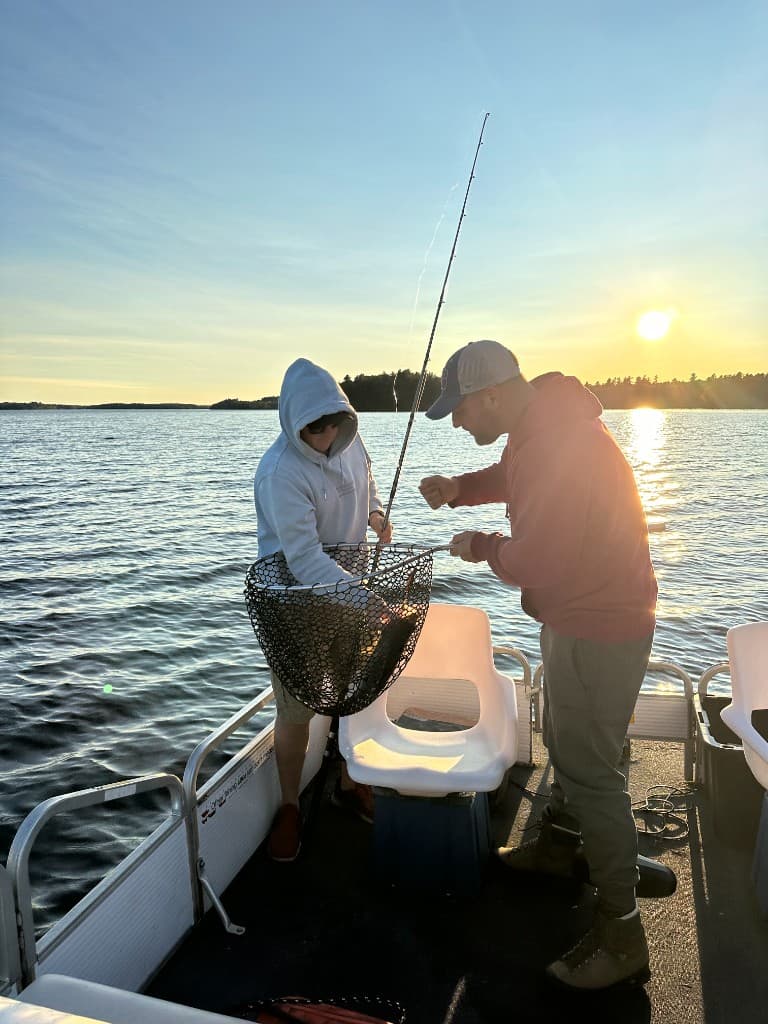
Life on the Islands
Your Island Awaits
Book a backcountry campsite for a night under the stars, or stay at Island View Retreat and paddle out for a day trip. Either way, Big Gull Lake's 25 island campsites are waiting.